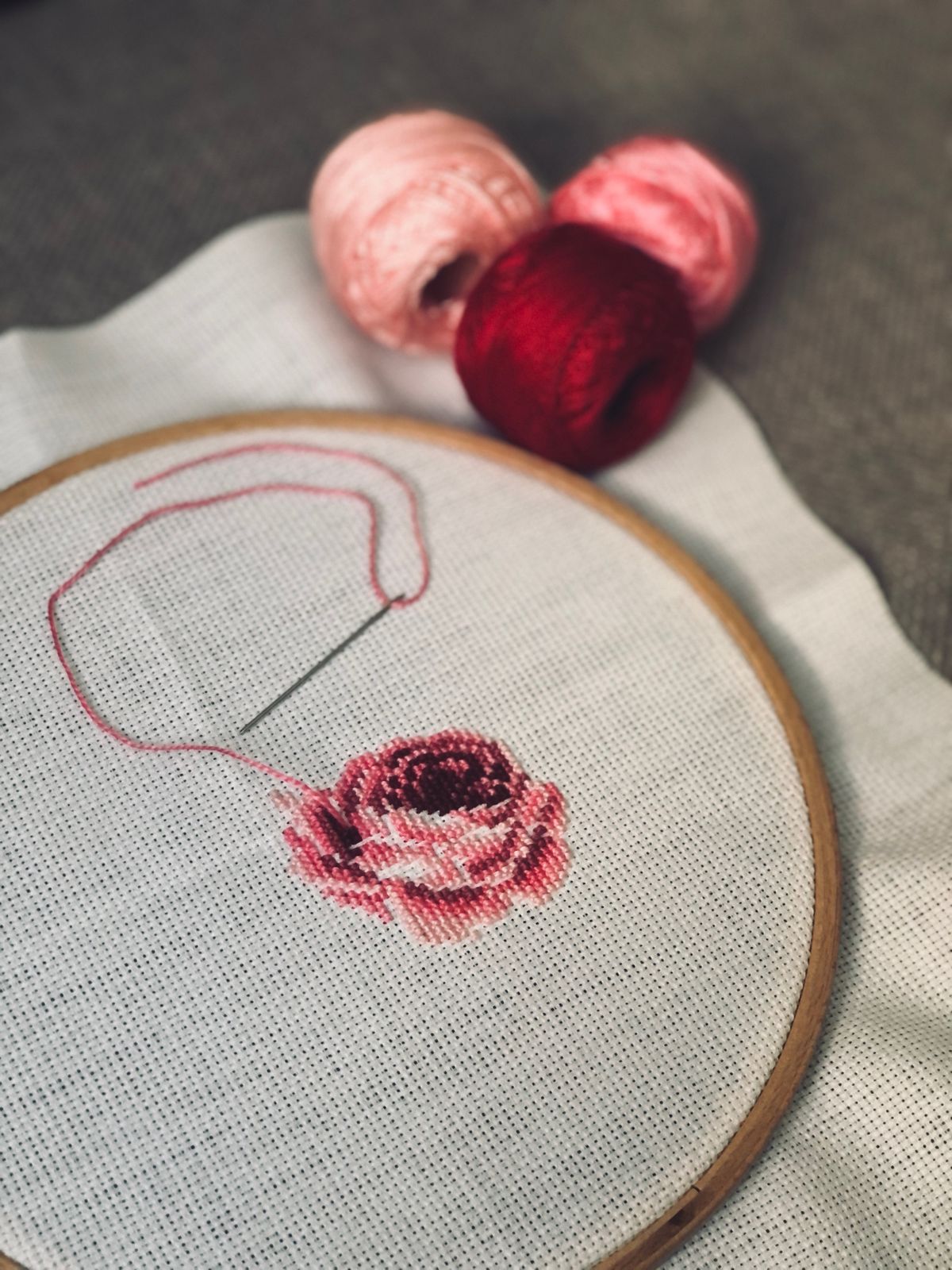
Teaching children to stitch is about more than threading a needle — it's about patience, imagination and pride in making something real. A child who finishes her first stitched heart carries herself a little taller for the rest of the day. The trick is to set up the first session so success arrives quickly, tangles stay small, and the whole thing feels like play.
Set up for success
Start with a blunt tapestry needle, a short length of chunky thread, and a piece of burlap or plastic canvas stretched in a small hoop — big holes forgive wobbly aim. Pre-thread two or three needles so waiting never breaks the spell, and tie the starting knot yourself. Keep the first sitting to fifteen minutes; ending while it is still fun guarantees there will be a second sitting.
First projects that work
Running stitch is the perfect first stitch: up, down, up, down, with a satisfying dashed line appearing like magic. Draw a big wavy line, a heart, or their initial on the fabric and let them follow it. Celebrate the back as well as the front, resist every urge to fix their stitches, and frame the finished piece — a hoop on a bedroom wall beats a gold star every time.
Expect knots. Expect the thread to shorten to a stub and vanish into the fabric. Laugh together, rethread, and carry on. What they remember years later is not the stitching but the afternoon beside you.
So pull up a second chair this weekend, thread two needles, and stitch side by side. Little hands learn fast — and they teach us to slow down.